Shoulder Pain in North York
Rotator Cuff Tears & Subacromial Impingement
If you feel a sharp pinch when reaching overhead, aching at night that wakes you when you roll onto the sore side, or weakness when lifting a saucepan, you may be dealing with a cuff tear or impingement. Swimmers, painters, and desk workers alike can develop inflammation or tiny tendon tears that limit dressing, driving, and sport.
A thorough physiotherapy assessment—postural analysis, strength testing, special orthopedic tests (Hawkins‑Kennedy, empty‑can), and ultrasound if required—pinpoints the exact tissue at fault. Once diagnosed, we combine joint mobilization, scapular‑stability taping, myofascial release, laser or ultrasound therapy, graded rotator‑cuff loading, and a corrective exercise program to restore pain‑free range. Research shows that structured, therapist‑guided rehab returns 80 % of small‑to‑moderate tears to full function within 12 weeks—often avoiding surgery.
Frozen Shoulder (Adhesive Capsulitis)
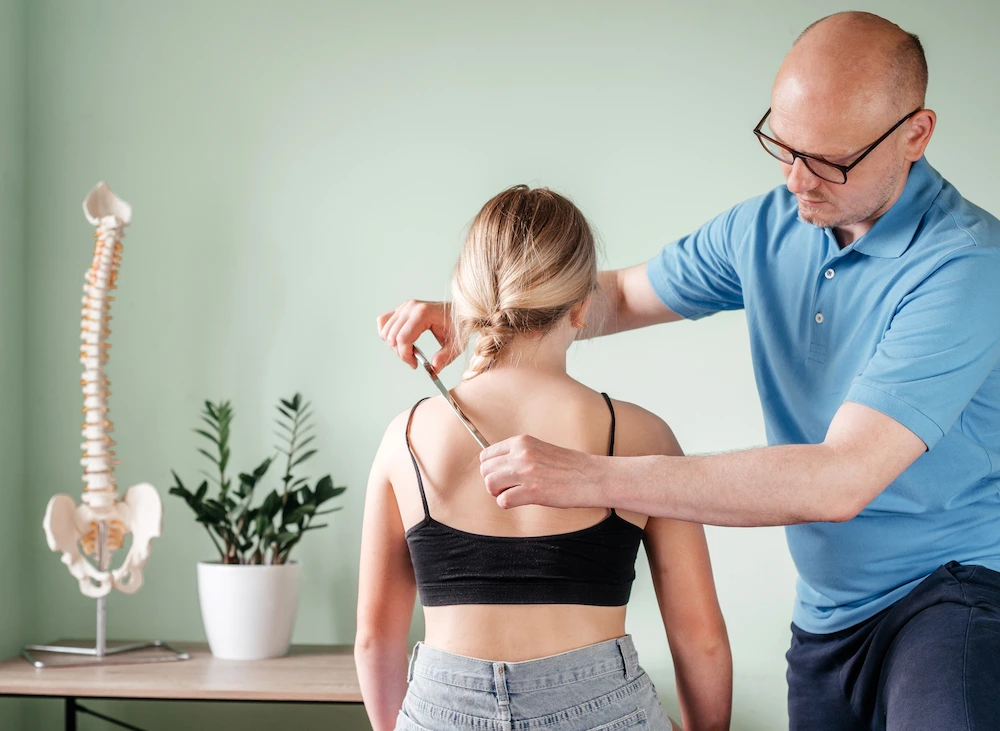
Frozen shoulder progresses through three stages—freezing (inflammatory pain), frozen (stiffness dominates), and thawing (gradual recovery). Primary idiopathic cases affect 2–5 % of adults (higher in diabetes and thyroid disease); secondary cases follow trauma or surgery. Hallmark signs include deep shoulder ache, night pain, and the inability to reach the bra‑strap or back pocket.
We begin with a detailed capsular‑pattern assessment, accessory‑glide testing, and screening for red‑flag pathology. Treatment blends gentle joint mobilizations (grade I–III), heat, interferential or laser therapy for pain relief, and stage‑specific stretching plus home pulley work. Progressive strengthening and shockwave therapy hasten the thawing phase. Evidence suggests that early physiotherapy shortens the frozen phase by up to six months compared with “wait‑and‑see.”
Sports Shoulder Injuries & Post Surgical Rehab
Overhead athletes—tennis, volleyball, baseball—often develop labrum tears, internal impingement, or labral instability, leading to clicking, loss of power, and fear of re‑injury. Post‑operative cases (rotator‑cuff repair, Bankart stabilization) require precise load progression to protect healing tissue yet prevent stiffness.
Your rehab roadmap starts with strength, range of motion, and kinetic‑chain screening plus return‑to‑sport testing (e.g., seated medicine‑ball throw). Treatment may include manual glenohumeral mobilizations, rotator‑cuff loading, scapular neuromuscular control drills, and incremental plyometrics. Electrotherapy, ultrasound, and ice manage post‑op swelling, while shockwave tackles stubborn scar tissue. Our sport‑specific protocols safely guide athletes back to serving, swinging, and swimming at pre‑injury levels.
References (APA)
Diercks, R. L., & Stevens, M. (2004). Gentle thawing of the frozen shoulder: A prospective randomized clinical trial comparing supervised neglect and intensive physical therapy. Journal of Shoulder and Elbow Surgery, 13(5), 499–502.
Kuhn, J. E. (2009). Exercise in the treatment of rotator cuff impingement: A systematic review and a synthesized evidence-based rehabilitation protocol. Journal of Shoulder and Elbow Surgery, 18(1), 138–160.
Wilk, K. E., & Macrina, L. C. (2016). Nonoperative and postoperative rehabilitation for shoulder injuries in the overhead athlete. Sports Health, 8(1), 79–91.
Our Services
Neurological Physiotherapy
Orthopedic Physiotherapy
Geriatric Physiotherapy
Request an Appointment
Reserve your spot with our medical team in just minutes.