Motor-Vehicle Accident treatment in North York
Motor-Vehicle Accident (MVA) Rehabilitation
Fast, informed recovery after a crash—right here in Toronto.
A car accident can transmit forces through your body in milliseconds, wrenching joints, straining muscles, and jarring the brain. At One Step Ahead Mobility, our MVA-certified physiotherapists guide you from the first paperwork to the final return-to-work clearance with an evidence-based plan tailored to whiplash, concussion, and the many other injuries that follow a collision.
How MVAs Injure the Body
- Rapid Deceleration & Rebound – Seat-belts stop the torso while the head, arms, and legs continue to move, creating abrupt stretching forces on the neck (whiplash) and spinal joints.
- Rotational Shear – When the vehicle spins or is hit at an angle, twisting stresses can strain discs, facet joints, and supporting ligaments from the cervical spine down to the low back.
- Direct Impact – Knees slam the dashboard, shoulders meet the door, or the head strikes the head-rest/airbag, causing contusions, joint sprains, or mild traumatic brain injury (concussion).
- Axial Compression – Vertical forces during roll-overs or curb jumps compress the spine, hips, and knees, sometimes leading to disc irritation or bone-marrow bruising.
Whiplash: The Most Common MVA Injury
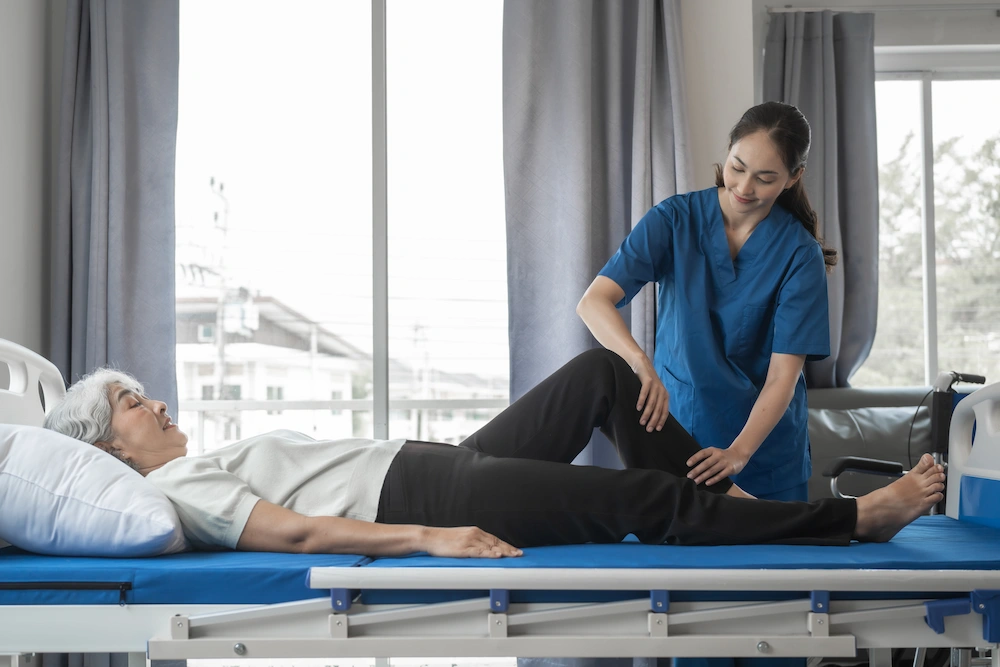
Whiplash-Associated Disorder (WAD) occurs when the neck snaps into hyper-extension then hyper-flexion within 70–120 ms—far faster than your muscles can guard. Typical tissue stress points include:
- anterior longitudinal ligament and posterior neck muscles
- facet joint capsules
- dorsal root ganglia (linked to nerve-related neck/arm pain)
Clinical grades (Quebec Task Force):
- Grade 0 – No neck symptoms, no physical signs
- Grade I – Neck stiffness/tenderness, no physical signs
- Grade II – Musculoskeletal signs (reduced ROM, point tenderness)
- Grade III – Neurological signs (weakness, sensory changes)
Early active care—gentle range, postural cueing, and reassurance—has been shown to cut chronic pain risk by up to 40 % compared with rest-and-collar alone (Sterling & Kenardy, 2023).
Red-Flag & Delayed-Onset Symptoms to Watch For
If any of these emerge, seek prompt medical review in addition to physiotherapy.
- Worsening headache or new visual disturbances
- Ringing in the ears, vertigo, or difficulty concentrating (possible concussion)
- Numbness, tingling, or weakness in an arm or leg
- Unremitting mid-line neck pain, especially at night (possible fracture or ligamentous injury)
- Deep, gnawing low-back pain with bladder or bowel changes
Conditions We Treat Post-Accident
Whiplash & Cervical Sprain/Strain
Graded exercise, manual therapy, vestibular input, and cognitive-behavioural pain strategies.
Post-Traumatic Concussion & Headache
Vestibulo-ocular rehab, exertion titration, neck-strengthening, and SCAT-6 return-to-drive/-work protocols.
Low-Back Pain & Disc Irritation
McGill-style core endurance, directional preference exercises, joint mobilisation, and BFR strength when normal loading is painful.
Shoulder Contusion or Rotator-Cuff Strain
Controlled range, scapular control, progressive resisted loading specific to seat-belt or door impact patterns.
Knee Dashboard Injury (PCL Strain, Meniscus Bruise)
Pain-swelling control, quadriceps strength, gait correction, and hop-test clearance.
How We Make Recovery Easier
Form & Paperwork Support
Ontario’s OCF-18, OCF-23, and AB-1 forms can feel overwhelming. We complete them with you, liaise with insurers, and track approval timelines so you’re never stuck in administrative limbo.
MVA-Experienced Team
Our therapists hold certifications in Advanced Practice Concussion Management, Mechanical Diagnosis & Therapy, and Cert. Sports Physiotherapy, ensuring up-to-date protocols.
Integrated Modalities
Manual therapy, dry needling, shock-wave, BFR, and computerized gait/vestibular analysis—seamlessly combined to target both acute pain and the biomechanical root of injury.
Return-to-Work & Sport Testing
Objective strength measures, Y-Balance, hop tests, and neuro-cognitive screens provide clear data for physicians, insurers, and—most importantly—you.
Bottom line: From first claim form to final performance test, we keep the process clear, compassionate, and evidence-driven—so you can focus on healing, not paperwork.
Ready To Get Back In The Driver’s Seat?
Book your Motor-Vehicle Accident Assessment today or call our MVA coordinator for free guidance on starting a claim. At One Step Ahead Mobility, we turn post-crash setbacks into comebacks—one confident step at a time.
Key References
Sterling, M., & Kenardy, J. (2023). Early active management versus immobilisation for reducing chronic whiplash: Systematic review and meta-analysis. Journal of Orthopaedic & Sports Physical Therapy, 53(2), 68-82.
Ontario Neurotrauma Foundation. (2021). Guidelines for Concussion/Mild Traumatic Brain Injury and Persistent Symptoms. 4th ed.
Quebec Task Force on Whiplash-Associated Disorders. (2019). Classification and Management of WAD. Spine, 44(10), 709-715.
Our Services
Neurological Physiotherapy
Orthopedic Physiotherapy
Geriatric Physiotherapy
Request an Appointment
Reserve your spot with our medical team in just minutes.