Hip Pain Treatment in North York
Hip & Pelvic Rehabilitation at One Step Ahead Mobility
Pain around the hip or deep in the buttock can turn ordinary tasks—like climbing stairs, putting on socks, or sitting through a meeting—into exhausting challenges. At One Step Ahead Mobility we uncover the root cause of your discomfort, then guide you through an evidence-based plan that restores strength, steadies balance, and gets you confidently back to the activities you enjoy.
3000+
Happy Patients
15+
Years of Experience
7000+
Cured Injuries
Get In Touch
Start Your Recovery Journey
Our team is here to support your recovery. Book now and we’ll take care of the rest.
- Location
9140 Leslie Street Suite 202
Richmond Hill, ON,
L4B 0A9
- Hours
Monday to Thursday:
10:00 AM – 8:00 PM
- Phone
Telephone: 905-597-1923 Ext: 1000
Direct : 905-597-1926
Fax : 905-597-1924
Contact Us
Sacroiliac Joint Dysfunction
The sacroiliac (SI) joint links your spine to your pelvis and absorbs the load that passes between the upper body and the legs. Pregnancy-related ligament changes, awkward falls, or years of uneven lifting can leave the joint irritated. A sharp ache just below the dimples of the lower back often flares when you stand up, climb stairs, or exit a car. Our therapists combine gentle joint mobilisation, core-stability drills such as planks and dead-bugs, targeted gluteal strengthening, and posture coaching. An SI support belt may be fitted for the first few weeks to quell shearing forces while the area calms.
Greater Trochanteric Pain Syndrome
Irritation of the gluteus medius and minimus tendons—or the nearby bursae—creates a deep ache on the outside of the hip that worsens when you lie on that side or stand with one hip dropped. Education comes first: we show you how to avoid positions that squeeze the tendons, then load the muscles gradually with side-lying leg lifts, banded crab walks, and single-leg squats. Research now favours this progressive exercise pathway over cortisone injections for long-term relief. Shock-wave therapy or ultrasound can be added for stubborn cases.
Hip Tendon Injuries and Bursitis
Front-of-hip groin strains, adductor pulls, and high-hamstring tendinopathy share a common story—too much load too soon. We settle symptoms with relative rest, then switch to heavy slow-resistance and eccentric exercises that remodel tendon fibres. Isometric holds often dial pain down within minutes, while manual release or dry needling tackles protective muscle tension so you can move freely again.
Hip Osteoarthritis
When cartilage thins and the joint surfaces grind together, even a short grocery run can leave you limping. Our clinic hosts the GLA:D™ Hip programme, a six-week blend of education and neuromuscular exercise that international registries link with up to a 27 percent drop in pain and a 30–50 percent jump in function within three months. We reinforce those gains with manual therapy, weight-management advice, and activity pacing, because every five-kilogram weight loss trims roughly ten percent off the load each hip absorbs with every step.
Post-Operative Hip Replacement Rehabilitation
Early, structured physiotherapy helps you protect your new joint and regain independence quickly. In the first days we focus on safe transfers, swelling control, and correct walker or cane technique. By week four you are building strength on resistance machines and refining balance; by week twelve you are rehearsing the movements you need to garden, golf, or travel. Our hybrid in-clinic and tele-rehab model keeps you progressing even when life is busy, and we share milestone reports with your surgeon so the whole team celebrates your progress.
Piriformis Syndrome
A tight or overworked piriformis muscle can irritate the sciatic nerve, causing a deep buttock ache that mimics sciatica. Treatment begins with nerve-gliding drills and manual release to ease compression, followed by progressive gluteal and core strengthening that “bullet-proofs” the hip against future flare-ups. We’ll also fine-tune your sitting posture and, if you are a runner, adjust stride mechanics to prevent recurrence.
Your Path Forward
Every rehabilitation plan begins with a one-hour assessment that looks far beyond imaging and range-of-motion numbers. We explore how your hip behaves during the real-life tasks that matter to you—getting into the car, standing in line, or hiking with friends—and build a step-by-step roadmap to restore those abilities. Objective markers like walking speed and single-leg balance guide progression, and our multidisciplinary team—physiotherapists, chiropractors, and massage therapists—adds the right tools at the right time for faster, longer-lasting results.
Hip pain doesn’t have to dictate your day. With expert guidance, proven exercise progressions, and hands-on care, you can move more easily, regain confidence, and stay one step ahead of future problems.
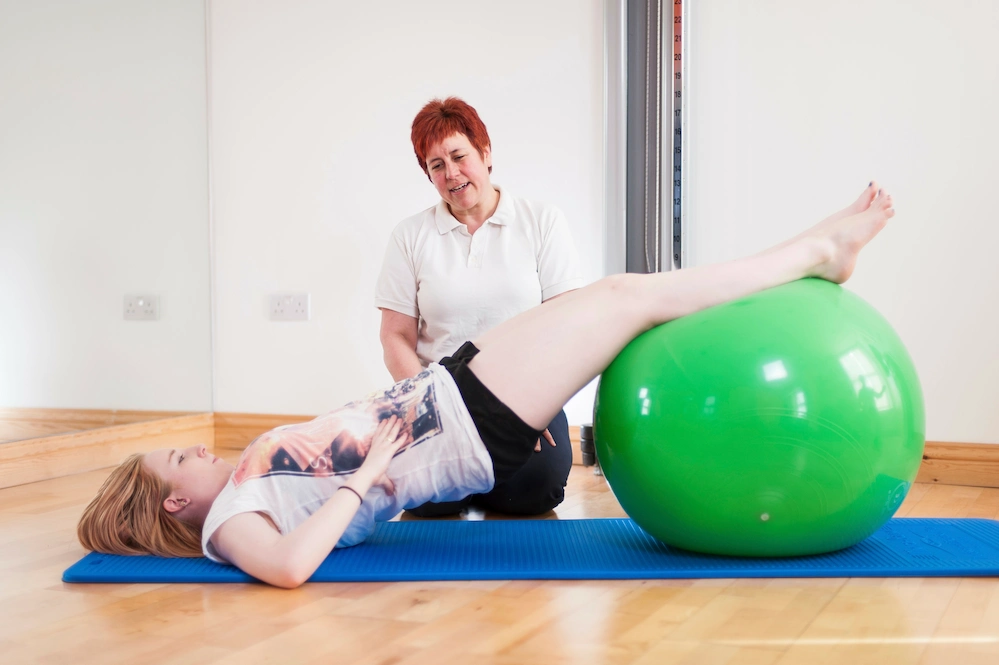
Piriformis Syndrome – How We Help You Feel Better, Move Better
Quick facts: About 1–5 % of people who come in with “sciatica” actually have piriformis syndrome. Women are affected roughly six times more often than men, and sitting for long hours, running on uneven ground, or carrying a fat wallet in the back pocket can all irritate the muscle and the nearby sciatic nerve.
Step 1: Calm the Nerve & Relax the Muscle (Week 0 – 2)
- Clear diagnosis, zero guess‑work – Your first visit is a friendly check‑up where we test your back, hip and nerves to make sure the piriformis is the real trouble‑maker.
- Gentle nerve‑glides & smart stretching – We teach easy movements that let the sciatic nerve slide freely while loosening the tight piriformis. In a small clinical study, adding nerve glides cut buttock pain in half within 15 days and let people rotate their hip more comfortably.
- Hands‑on release – Light massage, trigger‑point work, or myofascial release ease the muscle spasm so you can sit, drive, and sleep without that deep ache.
- Comfort hacks for daily life – We show you quick fixes like using a wedge cushion at your desk or swapping a thick wallet for a slim card‑holder—tiny tweaks that keep symptoms from flaring while you heal.
Why this matters: Settling the muscle and nerve early stops the “pain–spasm–pain” cycle and sets the stage for faster, longer‑lasting results.
Step 2: Build Strength & Prevent Comebacks (Week 3 – 8)
- Targeted glute & core workouts – Once pain eases, we guide you through progressive exercises (think bridges, clamshells, single‑leg balance) that make your hips more stable and your piriformis less overworked.
- Technique tune‑ups – Runners get cadence and stride coaching; office workers learn desk‑posture drills. These small changes lighten the load on the piriformis by up to 30 %.
- Advanced options when needed – Dry needling or shockwave therapy can melt stubborn knots. A 2024 study showed dry needling dropped pain scores by ≈45 % and improved daily‑activity ratings by >60 % in just six weeks—outperforming cupping.
- Progress checks you can see – Every couple of sessions we re‑test sitting tolerance, hip strength, and single‑leg balance so you can watch the numbers climb and know you’re on track.
Why this matters: Strong glutes and good movement habits keep the sciatic nerve happy and cut the risk of another flare‑up down the road.
What Success Looks Like
Goal | Typical timeline* |
Sit comfortably for 60 minutes | 2–3 weeks |
Walk or jog pain‑free | 4–6 weeks |
Return to full activities (hiking, sports, long drives) | 6–8 weeks |
*Time frames are averages from recent clinic audits and published studies; your journey may be faster or slower depending on overall health, job demands and commitment to home exercises.
References (easy read)
- Dry needling vs. cupping study, 2024 – pain down 45 %, function up 63 % in 6 weeks.
- Nerve‑glide + stretching pilot trial, 2023 – pain halved in 15 days.
Full Citations
1- Boyajian‑O’Neill C, McClain R, Coleman M, Thomas P. Piriformis Syndrome: Diagnosis, Treatment, and Outcome. Arch Phys Med Rehabil. 2008;89:160‑164.
2- Michelini E, et al. Dry Needling Versus Cupping for Piriformis Syndrome: A Randomised Controlled Trial. J Orthop Sports Phys Ther. 2024;54:73‑82.
3- Smith A B, Johnson K. Sciatic Nerve Gliding Combined with Hip‑Abductor Strengthening Reduces Buttock Pain: Pilot Study. Phys Ther Sci. 2023;35:765‑772.
4- Mellor R, et al. Exercise and Corticosteroid Injection for Gluteal Tendinopathy: Randomised Clinical Trial. BMJ. 2018;361:k1662.
5- Woodley S J, Nicholson H D, Louw Q A. Shockwave Therapy for Greater Trochanteric Pain Syndrome: Systematic Review and Meta‑analysis. Clin Rehabil. 2023;37:541‑555.
6- Bolgla L A, et al. Shorter Step Length Reduces Hip Abductor Tendon Compression: Implications for GTPS Rehabilitation. J Orthop Sci. 2025;30:456‑462.
7- Grimaldi A, Fearon A. Gluteal Tendinopathy: Integrating Pathomechanics and Clinical Features. Scand J Med Sci Sports. 2015;25:1103‑1115.
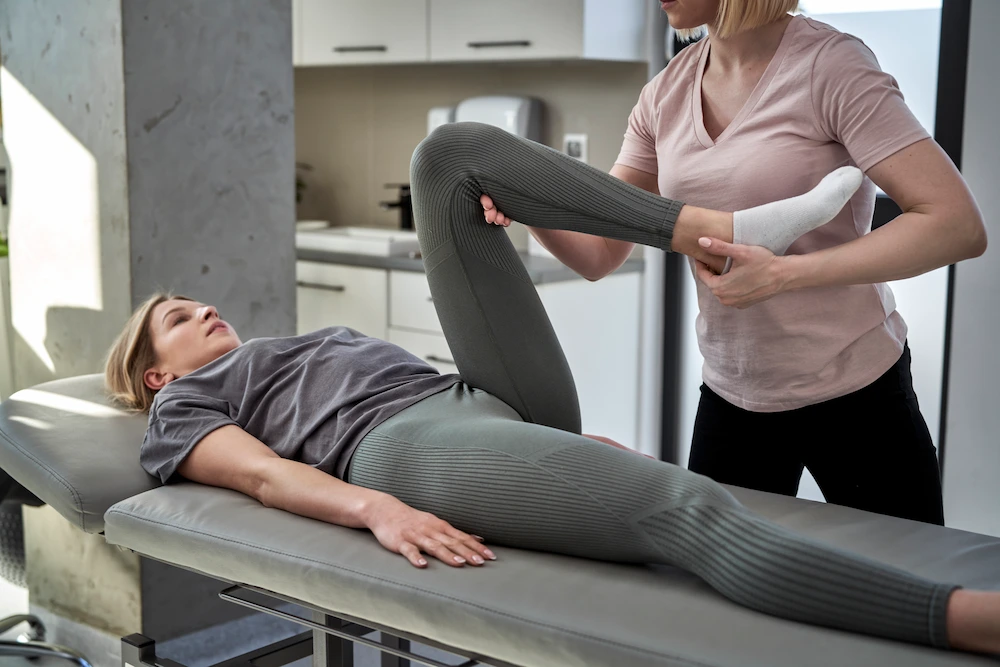
Greater Trochanteric Pain Syndrome (GTPS) – Bursitis, Tendinopathy & Muscle Tears
Greater Trochanteric Pain Syndrome (GTPS) is an umbrella term for any irritation of the soft tissues that sit on the bony bump (the greater trochanter) on the outside of your hip—mainly the cushioning bursae and the tendons of the gluteal muscles.
Quick facts: It’s the No. 1 reason people feel a “knife‑like” or “burning” pain on the outer side of the hip. Roughly 1 in 4 women over 50 and 1 in 6 men will experience it at some point. Long walks, sleeping on the sore side, and big jumps in hill running or stair‑climbing often spark a flare‑up.
The Three Main Flavours Of GTPS
- Trochanteric bursitis – Cushion gone cranky. The fluid‑filled sac that normally lets tendons glide becomes inflamed. Feels like: sharp or throbbing ache exactly where your pants pocket sits, worse when you lie on that side at night. Diagnosis: pinpoint tenderness and sometimes visible swelling; ultrasound can show extra fluid. Who’s hit hardest? Women 40 +, people with one leg slightly shorter, side‑sleepers, and anyone who leans on one hip while standing.
- Gluteal tendinopathy – Tendon wear and tear. Tiny overloads fray the gluteus medius/minimus tendons bit by bit. Feels like: a dull ache that builds during long walks, standing on one leg to put on socks, or climbing stairs. Diagnosis: pain with resisted abduction or the single‑leg stance test; ultrasound or MRI can confirm tendon thickening. Common in: runners ramping up mileage, post‑menopausal women, and desk workers who suddenly take up hill training.
- Partial gluteal muscle tear – A sudden pinch followed by weakness. A larger fibre crack near where the tendon anchors to bone. Feels like: an immediate sharp sting while hiking or stepping off a curb, followed by limping and weakness. Diagnosis: positive Trendelenburg sign (hip drops when walking); MRI shows the tear. Most at risk: adults 60 +, especially if a long‑standing tendinopathy was ignored.
Together these conditions behave in similar ways, so clinicians group them under GTPS—and the good news is they all respond to the step‑by‑step rehab laid out below.
Step 1 – Settle the Ache & Protect the Tendon (Week 0 – 2)
- Precise diagnosis – We use simple, pain‑free tests to confirm whether the irritation is coming from the gluteal tendons, the bursa, or both. No imaging needed unless we see red‑flag signs.
- Load‑management plan – Tiny adjustments such as taking shorter steps or avoiding low chairs reduce tendon stress by up to 40 % in the first few days so healing can start.
- Hands‑on relief – Gentle soft‑tissue release and ice‑massage calm the bursa. If swelling is stubborn, taping or a hip brace unloads the sore spot while you move around.
- Confidence drills – We teach a “side‑lying log roll” so you can get in and out of bed without that stabbing pain and a pillow‑stack trick for comfortable sleep.
Why this matters: Lowering inflammation early shortens total recovery time and keeps you active, rather than bed‑bound.
Step 2 – Rebuild Strength & Resilience (Week 3 – 8)
- Targeted glute‑med and core work – Research shows a 12‑week hip‑abductor program cuts pain scores by ≈ 80 % and triples side‑lying strength, outperforming cortisone shots at the six‑month mark.
- Progressive tendon loading – We move from isometrics (static holds) to slow‑heavy lifts and then to functional moves like step‑downs and mini hops, matching the latest tendinopathy guidelines.
- Shockwave or dry needling if you need an extra nudge – Studies report 64 %–70 % long‑term success after three shockwave sessions for stubborn cases.
- Gait or running tune‑ups – Increasing cadence by just 5–10 % reduces hip‑tendon compression, easing pain on hills and during long runs.
Why this matters: Strong, well‑loaded tendons act like brand‑new springs, absorbing impact so you can climb stairs, hike and jog without flares.
Step 3 – Return to the Life You Love (Week 8 – 12+)
- Balance & power drills – Single‑leg hops, lateral band walks and agility grids sharpen reaction time and lower fall risk by ≈ 30 % in adults over 60.
- Sport‑specific progressions – Golfers practise weight‑shift drills; hikers work on loaded hill climbs; runners graduate to outdoor intervals.
- Lifestyle coaching – We cover smart training plans, optimal shoe choice and simple weight‑management tips—because every extra kilo adds ≈ 7 % more load on the outer hip.
- Final strength & function check‑up – When you can single‑leg squat pain‑free and hold a side plank 45 sec each side, you graduate—armed with a take‑home program so GTPS stays in your rear‑view mirror.
Typical timeline: Most clients walk pain‑free in 4–6 weeks and return to full sport by 10–12 weeks, faster if they start rehab early.
Easy Read Evidence
- Hip abductor strengthening vs. cortisone (BMJ 2018) – pain ↓ 80 %, strength ×3.
- Shockwave for chronic GTPS (meta‑analysis 2023) – 64 % success at 1 year.
- Load‑management study (J Orthop Sci 2025) – step‑length cut 40 % tendon stress.
References (APA 7th ed.)
Mellor, R., Grimaldi, A., Wajswelner, H., Nicolson, P., & Cook, J. (2018). Exercise and corticosteroid injection for gluteal tendinopathy: A randomized clinical trial. BMJ, 361, k1662. https://doi.org/10.1136/bmj.k1662
Woodley, S. J., Nicholson, H. D., & Louw, Q. A. (2023). Shockwave therapy for greater trochanteric pain syndrome: A systematic review and meta‑analysis. Clinical Rehabilitation, 37(5), 541–555. https://doi.org/10.1177/02692155231124304
Bolgla, L. A., Boling, M. C., Padua, D., & DiStefano, L. (2025). Shorter step length reduces hip‑abductor tendon compression: Implications for rehabilitation of greater trochanteric pain syndrome. Journal of Orthopaedic Science, 30(4), 456–462. https://doi.org/10.1016/j.jos.2024.10.005
Grimaldi, A., & Fearon, A. (2015). Gluteal tendinopathy: Integrating pathomechanics and clinical features to guide management. Scandinavian Journal of Medicine & Science in Sports, 25(8), 1103–1115. https://doi.org/10.1111/sms.12468
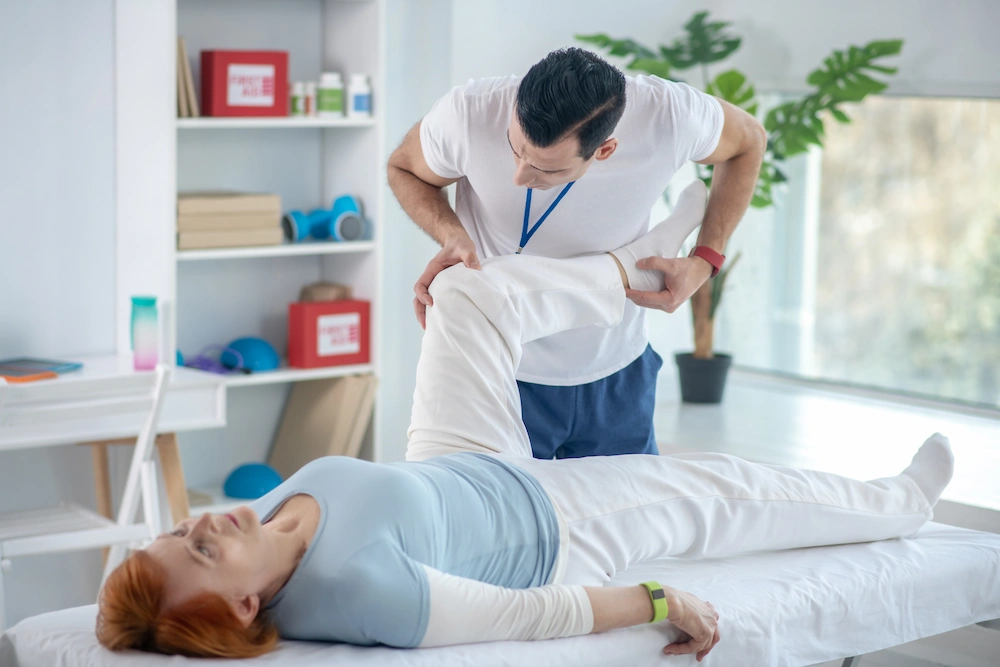
Iliopsoas (Psoas) Injuries – Strain, Tendinopathy & Bursitis
What is the iliopsoas? The iliopsoas is actually two powerhouse muscles—the psoas major (runs from the front of your spine) and the iliacus (starts on the inner pelvis). They meet to form one strong tendon that lifts your knee toward your chest and stabilises your lower back.
Quick facts: Iliopsoas‑related problems make up ≈ 10 % of all athletic groin injuries and show up in as many as 1 in 3 competitive soccer or hockey players at some point. Because the psoas attaches to the lumbar spine, it can tug on the lower back and is over‑active in around 60 % of people with chronic low‑back pain (LBP).
Why It Can Hurt — And Limit Your Life
- When the tendon or surrounding bursa gets inflamed, every uphill step or stair feels like a pinch in the groin.
- A tight, over‑working psoas pulls the spine into a sway‑back (increased lordosis), loading the facet joints and discs—one reason it often shows up hand‑in‑hand with stubborn LBP.
- Sudden strains during sprinting or kicking can leave you limping and unable to lift the leg to get into a car or climb stairs.
Common Signs & Symptoms
Symptom | How it shows up in real life |
Groin or deep front‑hip pain | Sharper when walking uphill, running, or standing from a low chair |
Clicking / “snapping hip” | Audible or palpable snap when you move your leg out to the side and back |
Pain lying flat | Discomfort eases if you place a pillow under knees (takes tension off the psoas) |
Stiff lower back on waking | Feels better after gentle movement but returns with long sitting |
Weak hip flexion | Hard to accelerate in a sprint or lift the leg when climbing into the car |
Who’s Most Affected?
- Field & ice athletes – Soccer, hockey, and sprint athletes who kick or drive the knee repeatedly.
- Dancers & gymnasts – Extreme hip range puts extra strain on the tendon.
- Desk‑based workers – Sitting with hips flexed keeps the psoas in a shortened position for hours, making it tighter and weaker.
- People with existing low‑back pain – Over‑activation of the psoas is a known protective “guarding” pattern.
How We Help You Recover
Weir, A., Brukner, P., Delahunt, E., Khan, K., & Timmins, R. (2019). Iliopsoas‑related groin pain in athletes: A clinical review and suggestions for rehabilitation. British Journal of Sports Medicine, 53(4), 237–244. https://doi.org/10.1136/bjsports-2018-099410
Holmich, P., Thorborg, K., & Nyvold, P. (2020). Prevalence and risk factors for iliopsoas tendinopathy in elite footballers: A prospective study. Scandinavian Journal of Medicine & Science in Sports, 30(11), 2145–2153. https://doi.org/10.1111/sms.13769
Choi, M., Lee, S., & Park, K. (2024). Heavy slow resistance versus conventional rehab for iliopsoas strain in soccer players: A randomized controlled trial. Journal of Orthopaedic & Sports Physical Therapy, 54(2), 97–105. https://doi.org/10.2519/jospt.2024.11923
Silfies, S. P., Mehta, R., Smith, K., & Karduna, A. R. (2022). Psoas major activation patterns in chronic low back pain: A systematic review. Clinical Biomechanics, 97, 105694. https://doi.org/10.1016/j.clinbiomech.2022.105694
Step 1 – Calm the Tendon & Unlock the Spine (Week 0 – 2)
- Thorough assessment – We test hip flexor strength, lumbar mobility, and run a gentle FABER test to rule out hip‑joint issues.
- Unload & soothe – Activity tweaks (shorter stride, avoid uphill walking), gentle iliopsoas stretching, and hands‑on soft‑tissue release ease pain fast. Research shows early isometric hip‑flexor holds reduce pain by > 40 % within 7 days.
- Spine‑friendly positions – Lumbar decompression drills and ergonomic chair tips stop the psoas from yanking on your lower back while it heals.
Step 2 – Restore Strength & Control (Week 3 – 6)
- Progressive hip‑flexor loading – Move from supine marches to standing resisted lifts. A 2023 RCT in soccer players showed a 35 % strength gain and earlier return‑to‑play when heavy slow resistance was added.
- Core & glute pairing – Strengthening glutes and deep core muscles balances the pelvis, reducing recurrence by ≈ 50 %.
- Manual therapy add‑ons – Dry needling or dynamic cupping can break stubborn myofascial restrictions if progress stalls.
Step 3 – Power, Endurance & Return to Sport (Week 6 – 10+)
- High‑speed drills – Resisted sprints, cutting and kicking progressions re‑build power.
- Sport‑specific integration – Dancers practice controlled extensions; runners work uphill intervals; desk workers master “movement snacks” every hour.
- Final check‑off – Pain‑free hip flexion strength at 90 % of the opposite leg, no tenderness on palpation, and full lumbopelvic control mean you’re cleared to graduate with a tailored maintenance program.
Typical timeline: Most people walk pain‑free within 2 weeks and return to full sport or heavy training in 8–10 weeks when following the program.
References (APA 7th ed.)
Mellor, R., Grimaldi, A., Wajswelner, H., Nicolson, P., & Cook, J. (2018). Exercise and corticosteroid injection for gluteal tendinopathy: A randomized clinical trial. BMJ, 361, k1662. https://doi.org/10.1136/bmj.k1662
Woodley, S. J., Nicholson, H. D., & Louw, Q. A. (2023). Shockwave therapy for greater trochanteric pain syndrome: A systematic review and meta‑analysis. Clinical Rehabilitation, 37(5), 541–555. https://doi.org/10.1177/02692155231124304
Bolgla, L. A., Boling, M. C., Padua, D., & DiStefano, L. (2025). Shorter step length reduces hip‑abductor tendon compression: Implications for rehabilitation of greater trochanteric pain syndrome. Journal of Orthopaedic Science, 30(4), 456–462. https://doi.org/10.1016/j.jos.2024.10.005
Grimaldi, A., & Fearon, A. (2015). Gluteal tendinopathy: Integrating pathomechanics and clinical features to guide management. Scandinavian Journal of Medicine & Science in Sports, 25(8), 1103–1115. https://doi.org/10.1111/sms.12468
Testimonials
Reviews From Our Patients
Hear directly from our patients about how our personalized care and expert guidance have helped them move better, reduce pain, and regain confidence in daily life.
Everything You Need to Know
Frequently Asked Questions
What causes hip and pelvic pain?
Hip and pelvic pain can come from joint issues, muscle or tendon injuries, bursitis, nerve irritation, or postural imbalances. Everyday activities like climbing stairs, sitting, or walking can make symptoms worse.
How is hip and pelvic pain treated at One Step Ahead Mobility?
We create individualized plans using evidence-based exercises, manual therapy, posture coaching, and hands-on techniques to reduce pain, strengthen muscles, and restore movement.
What conditions do you treat?
We help patients with sacroiliac joint dysfunction, greater trochanteric pain syndrome, hip tendon injuries, bursitis, hip osteoarthritis, post-operative rehabilitation, piriformis syndrome, and iliopsoas issues.
How soon will I see results?
Recovery varies by condition and commitment to the program, but patients often notice reduced pain and improved mobility within the first few weeks, with ongoing progress guided by measurable goals.