Geriatric Rehabilitation in North York
Geriatric Rehabilitation at One Step Ahead Mobility
Aging is a journey filled with wisdom and cherished memories, yet it can bring unwelcome companions: joints that protest at dawn, legs that tire halfway down the block, and a fear of falling that steals independence. At One Step Ahead Mobility in Toronto, we deliver warm, evidence-based geriatric physiotherapy that protects autonomy, restores confidence, and helps older adults keep enjoying the people and places they love.
Everyday Challenges We Address
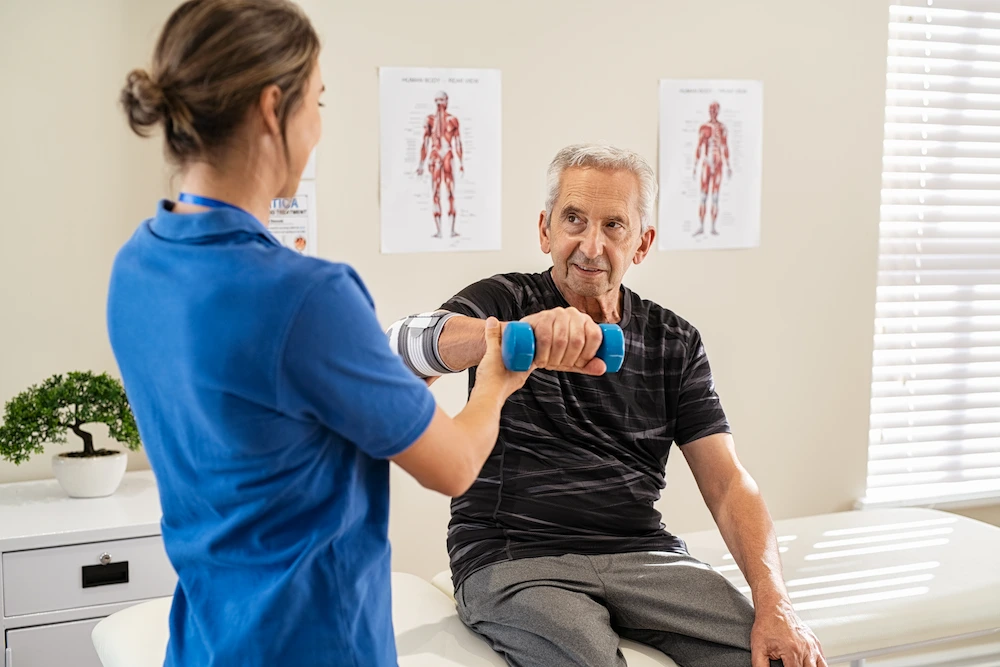
Declining strength and endurance — When leg and core muscles weaken, even rising from a favourite arm-chair can feel like scaling a mountain. The extra effort often signals knee or hip osteoarthritis, sarcopenia, or deconditioning after illness, and it triples the risk of falling.
Balance problems and fear of falling — A single misstep can shatter a hip or wrist, launching months of surgery, rehabilitation, and dependence. Hip fractures double one-year mortality in adults over 65, and the dread of that outcome often keeps seniors indoors, shrinking social circles and accelerating muscle loss and loneliness.
Joint pain and stiffness — Arthritis, limited flexibility, and postural changes can turn dressing, bathing, or rising from a chair into hard work, eroding self-confidence and quality of life.
Slower walking speed — When every step feels like wading through molasses, catching the bus, keeping pace with grandchildren, or reaching the washroom in time becomes stressful. Ms. Johnson, 83, reluctantly gave up her weekly bridge game because she could no longer keep up on the sidewalk—leading to isolation, low mood, and further decline.
Caregiver strain — As a loved one becomes more dependent, family roles shift overnight. Adult children may miss work to drive to appointments, spouses risk back pain assisting transfers, and everyone lives with constant anxiety about the next fall. This chronic stress can strain relationships and steal precious moments together.
Falls-Prevention And Mobility-Enhancement Programs
Comprehensive assessment and personalised exercise planning
We evaluate strength, balance, flexibility, gait mechanics, vision, footwear, medication side-effects, and home hazards before creating an individualised program that targets lower-limb power, ankle proprioception, and core stability.
Evidence-based balance training
Tandem walking, single-leg stance, foam-surface drills, and gentle perturbations sharpen balance reactions. Large trials show that such programs cut fall rates by about twenty-three percent (Sherrington et al., 2019).
Low-Back Pain & Disc Irritation
Dual-task and SmartFit® cognitive-motor drills
Strength and power conditioning
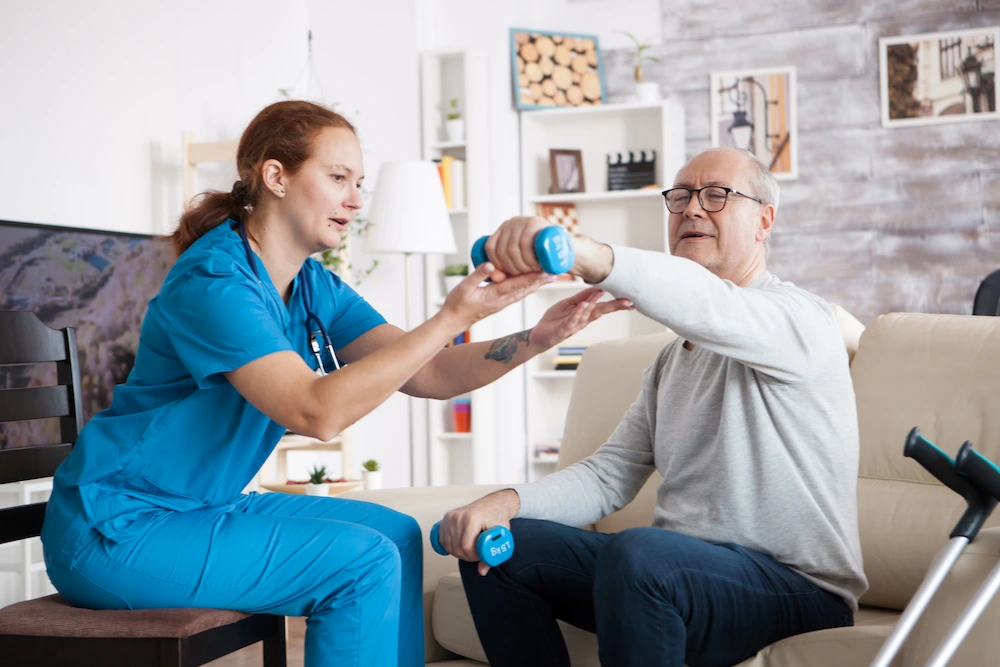
Progressive resistance (sit-to-stands, weighted carries, step-ups) rebuilds muscle mass and bone density. Twice-weekly sessions improve chair-rise speed, mood, and executive function (Liu-Ambrose et al., 2012).
Gait re-education and endurance training
Treadmill intervals, Nordic pole-walking, and step-length cueing raise walking speed; every 0.1 m/s gained lowers ten-year mortality by roughly twelve percent (Studenski et al., 2011).
Functional task practice
We rehearse real-life activities—getting up from low sofas, negotiating curbs, loading dishwashers—so clinic gains translate into everyday victories.
Home-safety and environmental modifications
Our physiotherapists, often in partnership with occupational therapists, recommend grab bars, brighter lighting, clutter removal, and slip-resistant flooring to create a safer living space.
Assistive devices and family education
Proper cane or walker prescription and training boost stability and confidence. We coach families on medication reviews, vision checks, and footwear to further reduce fall risk.
Scientific Proof That Physiotherapy Works
- Balance-challenging exercise programs reduce fall rates by about twenty-three percent (Sherrington et al., 2019).
- Each 0.1 m/s boost in gait speed lowers ten-year mortality by roughly twelve percent (Studenski et al., 2011).
- Twice-weekly resistance training improves chair-rise speed, executive function, and mental health in community-dwelling seniors (Liu-Ambrose et al., 2012).
- SmartFit cognitive-motor training has been shown to increase dual-task gait speed and cut Timed Up & Go times more than walking practice alone (Saga et al., 2022).
Bottom Line
Compassionate, supervised physiotherapy not only strengthens muscles, steadies balance, and elevates mood—it also reduces fall-related injuries and may even extend healthy life expectancy. With the right guidance, older adults can keep moving forward, one confident step at a time.
Our Services
Neurological Physiotherapy
Orthopedic Physiotherapy
Geriatric Physiotherapy
Request an Appointment
Reserve your spot with our medical team in just minutes.