Multiple Sclerosis in North York
Multiple Sclerosis Rehabilitation at One Step Ahead Mobility
Multiple Sclerosis (MS) is a chronic immune-mediated condition in which the body’s own defences attack the myelin sheath surrounding nerves in the brain and spinal cord. Demyelination and axonal injury interrupt the smooth flow of electrical impulses, leading to muscle weakness, spasticity, balance problems, fatigue, heat sensitivity, and walking or coordination difficulties; cognitive, sensory, and visual changes are also common.
Early, ongoing physiotherapy helps preserve function, manage symptoms, and keep people with MS engaged in the activities that give life meaning. At One Step Ahead Mobility, care begins with education and self-management strategies, then progresses to tailored exercise and technology-assisted interventions designed around each individual’s goals and clinical presentation.
How Physiotherapy Makes a Difference
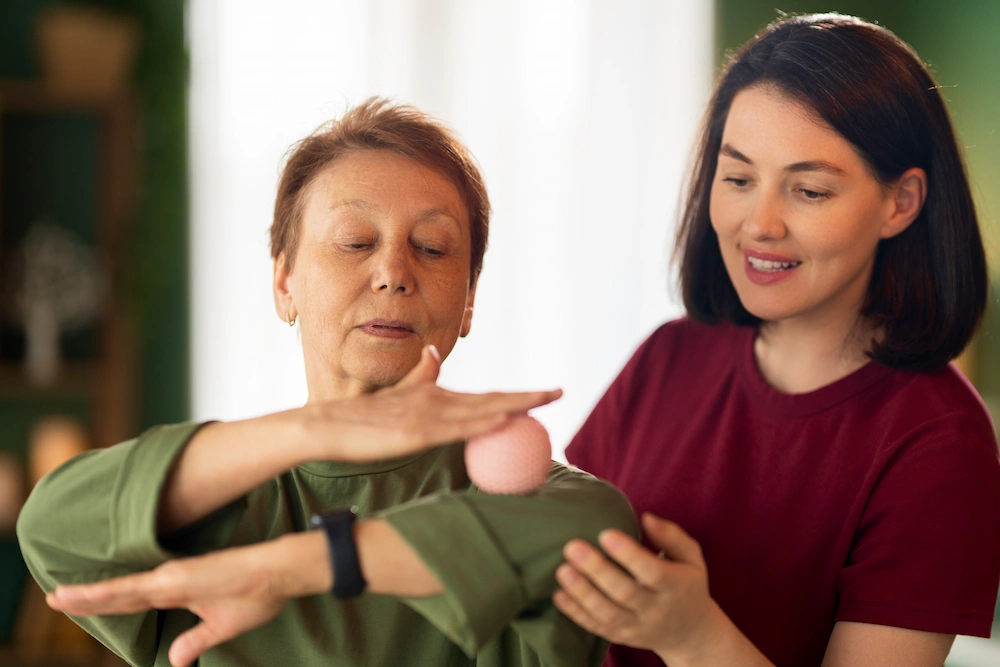
- Progressive resistance and carefully dosed aerobic exercise counter secondary weakness and deconditioning, boosting strength, cardiovascular fitness, and overall endurance.
- Task-oriented balance drills, dynamic weight-shifts, and dual-task gait training sharpen stability during daily tasks such as climbing stairs or carrying groceries.
- Guided stretching, positional techniques, and functional electrical stimulation help reduce spasticity, expand range of motion, and make movement initiation smoother.
- Treadmill training with body-weight support, robotic exoskeleton sessions, and cue-based over-ground retraining improve stride length, foot clearance, and walking speed.
- Functional practice—repeated sit-to-stands, obstacle negotiation, or dual-task walking—ensures clinic gains carry over to daily life.
- Core and pelvic-floor strengthening enhance posture, reduce back pain, and support bladder control.
Evidence-Based Programmes We Offer
Our team matches aerobic and resistance intensity to each person’s Expanded Disability Status Scale (EDSS) level, following international guidelines that recommend working at 60–80 percent of maximum heart rate. Research shows this approach can increase 6-Minute Walk distance and lower perceived fatigue. Aquatic therapy, supported by randomized trials, improves balance and reduces fatigue while minimising joint stress. Task-specific gait training that pairs cognitive challenges with walking enhances everyday mobility and reduces interruptions caused by dual-task demands. Cooling vests, fan-assisted cycling, and other temperature-management techniques make higher-intensity sessions feasible for heat-sensitive clients.
Aquatic Therapy
Supported by randomized trials, this programme improves balance and reduces fatigue while minimising joint stress.
Task-specific Gait Training
This programme pairs cognitive challenges with walking enhances everyday mobility and reduces interruptions caused by dual-task demands.
Temperature Management
Cooling vests, fan-assisted cycling, and other temperature-management techniques make higher-intensity sessions feasible for heat-sensitive clients.
The Science Behind Our Approach
A 2021 Cochrane review spanning forty-five randomised trials concluded that physiotherapy-based exercise produces moderate-to-large improvements in walking speed, fatigue, and quality of life for people with MS. Combined aerobic and resistance training is particularly effective for mobility, while balance programmes significantly reduce fall risk. Professional bodies now recommend at least 150 minutes of moderate-intensity exercise each week plus two strength sessions, tailored and supervised by neuro-rehabilitation clinicians.
References
- Dalgas, U., et al. (2019). Exercise and multiple sclerosis: Recommendations from the international consensus conference. Multiple Sclerosis Journal, 25(11), 1467–1479.
- Ghaffari, A., et al. (2020). The effect of aquatic exercise training on fatigue and quality of life in patients with multiple sclerosis: A randomised controlled trial. Physiotherapy Research International, 25(4), e1848.
- Heine, M., et al. (2021). Physical activity interventions for multiple sclerosis. Cochrane Database of Systematic Reviews, 2021(11), CD009956.
- Khan, F., et al. (2021). Rehabilitation interventions in multiple sclerosis: Recommendations from the Consortium of MS Centers. International Journal of MS Care, 23(2), 70–82.
Our Services
Neurological Physiotherapy
Orthopedic Physiotherapy
Geriatric Physiotherapy
Request an Appointment
Reserve your spot with our medical team in just minutes.